
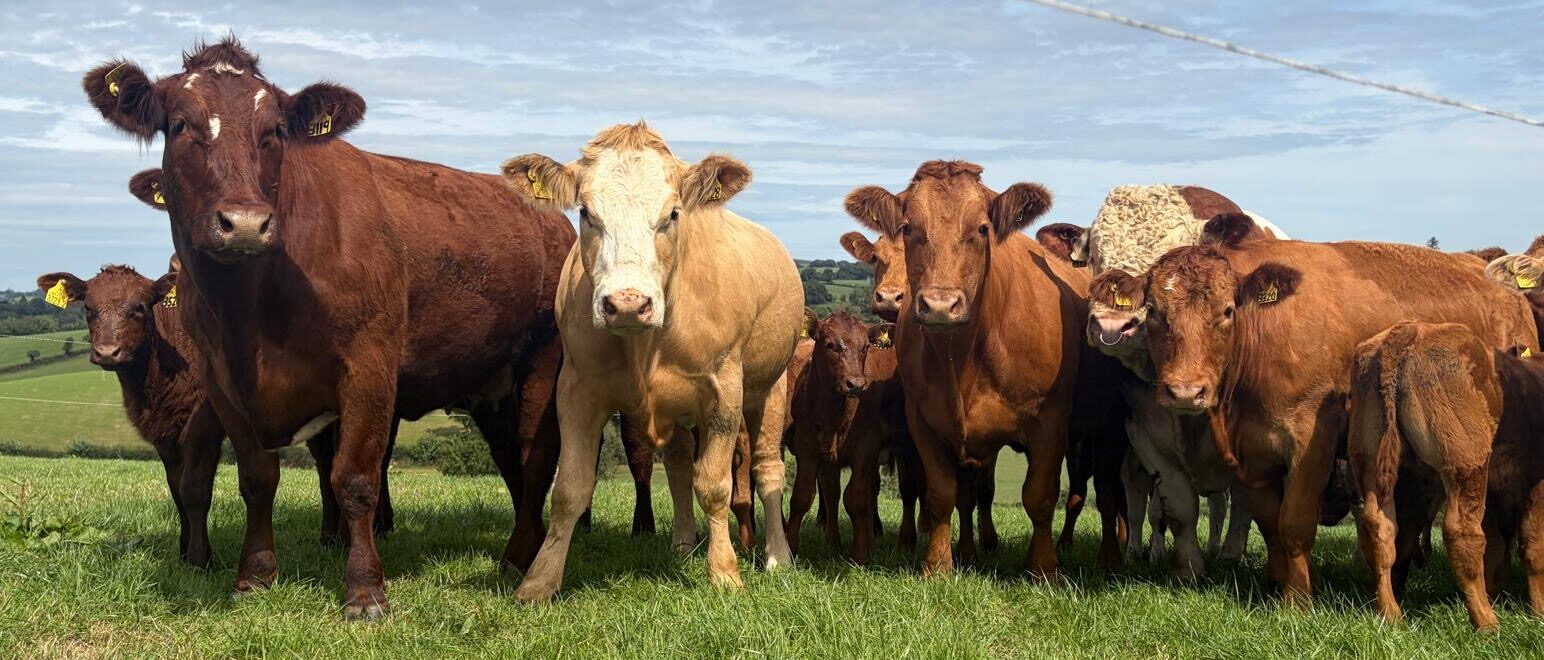
Polled describes cattle that are naturally born without horns. Their horn status is associated with their inherited genetics and the condition is a dominant trait, meaning an animal only needs to carry one copy of a polled gene in order to be genetically polled.
What are the Polled variants?
SRG tests for two important polled variants: Polled Celtic (PC) and Polled Friesian (PF).
Polled Celtic (PC) is one of the recognised genetic variants associated with naturally polled cattle and is commonly found in a range of European beef breeds. Identifying the Celtic variant can help farmers understand the genetic basis of an animal’s polled status and its potential to pass polledness on to its offspring.
Polled Friesian (PF) is another recognised polled variant and is particularly relevant to Holstein-Friesian cattle. Like the Celtic variant, it is associated with naturally polled cattle, but it has a different genetic origin.
Although both variants are associated with polledness, PC and PF are different genetic variants. Identifying which variant an animal carries can therefore provide more detailed information when making breeding decisions.
How is Polled Inherited?
Heterozygous Polled Bull × Homozygous Horned Cow
Possible offspring genotypes
The heterozygous polled bull has a 50% chance of passing on P. The homozygous horned cow always passes on p. The expected offspring are 50% Pp (heterozygous polled) and 50% pp (homozygous horned).
Homozygous Polled Bull × Homozygous Horned Cow
Possible offspring genotypes
The homozygous polled bull always passes on P, while the homozygous horned cow always passes on p. All offspring are expected to be Pp (heterozygous polled).
Heterozygous Polled Bull × Heterozygous Polled Cow
Possible offspring genotypes
Each parent has a 50% chance of passing on P and a 50% chance of passing on p. The expected offspring are 25% PP (homozygous polled), 50% Pp (heterozygous polled) and 25% pp (homozygous horned).
Homozygous Polled Bull × Heterozygous Polled Cow
Possible offspring genotypes
The homozygous polled bull always passes on P. The heterozygous polled cow can pass on either P or p. The expected offspring are 50% PP (homozygous polled) and 50% Pp (heterozygous polled).
Why test for Polled?
Polled testing can help farmers:
- Select breeding bulls: Understand whether a bull carries a variant associated with naturally polled and how it may be passed to offspring.
- Choose replacement females: Use genetic information when selecting animals for a breeding programme that aims to increase polledness.
- Plan future matings: Consider both parents’ results to estimate the likelihood of calves inheriting a relevant variant.
- Support herd management and welfare: Develop a breeding strategy that may reduce the need for routine horn removal and debudding.
Where can you find your results?
Once your sample has been successfully genotyped and the parentage verification process is complete, your available genotype information can be viewed in the ‘Genomics’ section of the SRG User Portal.
To access your results:
- Log in to your SRG User Portal.
- Navigate to the ‘Genomics’ section.
- Locate the ‘Myostatin & Polled’ tab and review the available genotype information.
- Consider the results alongside your breeding objectives and other available herd information.
If you need help locating your genomic information or have any questions, please contact our customer support team on 02820462280 or email [email protected].


