
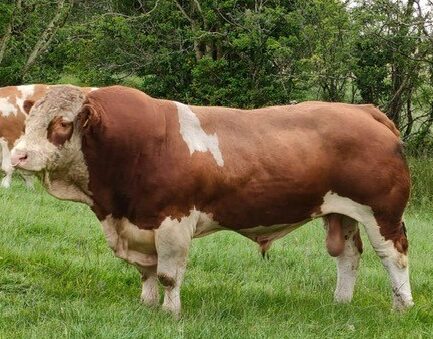
What is Myostatin?
Myostatin, also known as growth differentiation factor 8 (GDF8), is a protein involved in regulating muscle growth and development
When Myostatin functions normally, it helps regulate muscle development. Naturally occurring genetic variants can alter how the gene functions, allowing greater muscle development than would otherwise be expected.
Some variants are associated with a pronounced increase in muscle mass, commonly described as double muscling. Others are associated with more moderate changes in muscularity and carcass characteristics without producing the same degree of extreme muscling.
There are numerous known Myostatin variants in cattle, and their effects can differ considerably. Some are more common in particular breeds, while others occur across several breeds.
SRG tests for 9 common Myostatin variants [Myostatin C313Y, Myostatin D182N, Myostatin E226X, Myostatin F94L, Myostatin L64P, Myostatin NT419, Myostatin NT821DEL11, Myostatin Q204X, Myostatin S105C], helping farmers understand which of these variants have been identified in their animals.
Why is Myostatin Status Important?
Myostatin variants can influence traits that matter in beef production, including carcass weight, conformation, fat cover, meat characteristics and calving ease. The effect depends on the specific variant, the number of copies carried, breed background and the animal’s wider genetics.
Knowing an animal’s Myostatin status can help farmers:
- Make informed sire selections by understanding which variants a bull may pass to his calves.
- Plan matings by considering the genetics of both the bull and cow, particularly where variants may be associated with calving difficulty.
- Support production goals by providing additional information when selecting for carcass weight, muscularity, conformation and fat cover.
- Manage genetics over generations by understanding which variants animals carry and how they may be inherited.
Myostatin results are best used alongside breeding indexes, calving-ease information, pedigree and performance records. They provide another useful piece of information when selecting animals that suit the farm’s overall breeding and production goals, rather than being used as a stand-alone measure of an animal’s quality.
How is Myostatin Inherited?
Cattle inherit one copy of the Myostatin gene from each parent, so an animal can carry zero, one or two copies of a specific variant.
The effect of carrying one or two copies depends on the variant itself. For some disruptive variants, two copies can be associated with more pronounced muscular development, while other variants may show different effects. Copy number should therefore always be considered alongside the specific variant and the animal’s wider genetics.
Zero Copies
Does not carry the variant.
Heterozygous
Carries one copy of the variant e.g. Q204X.
Homozygous
Carries two copies of the variant e.g.Q204X.
An animals likelihood of inheriting a specific Myostatin variant depends on the genetic combination passed on by the sire and dam, with each parent contributing one copy of the gene:
Bull with 1 x Q204X copy × Cow with 0 copies
1 copy
0 copies
Bull with 2 x Q204X copies × Cow with 0 copies
2 copies
0 copies
Bull with 1 x Q204X copy × Cow with 1 x Q204X copy
1 copy
1 copy
Key Myostatin Mutations
There are numerous types of myostatin mutations with some common mutations influencing on muscle development, carcass merit and calving performance these are explained below:
Animals carrying one copy (heterozygous) typically display moderate expression of traits.
Animals carrying two copies (homozygous) generally show a more pronounced effect.
The F94L gene is commonly known as the ‘profit gene’ animals with a copy of this gene can show improved carcass traits with no associated increased calving difficulty.
- Leaner carcasses and more tender beef due to increased muscle fibres.
- Heavier calves causing no associated increased calving difficulties.
The Q204X mutation is associated with improved carcass quality and increased muscle mass.
- Leaner carcasses with reduced external fat, greater loin depth, muscling expression and improved meat tenderness.
- Heavier birth weights in calves resulting in potential reduction in maternal calving ease. Some cows might also have slightly lower milk production.
NT821 is associated with improved carcass quality and increased muscle mass.
- Increased muscle development, improved feed efficiency and lower fat deposition.
- Heavier birth weights resulting in increased risk of calving difficulties. Some cows can also have limited pelvic capacity causing further calving difficulties.
E226X is a myostatin mutation linked to lean muscle growth and improved carcass traits.
- Leaner carcasses, improved meat tenderness and increased muscle fibres.
- Heavier birth weights and possible calving difficulties.
Myostatin Frequency in Beef Breeds
Table 1. Percentage of animals carrying 1 or 2 copies of segregating myostatin variants in the most common beef breeds (based on purebreds only).1
| Breed | E226X | F94L | Nt821 | Q204X | ||||
|---|---|---|---|---|---|---|---|---|
| 1 copy | 2 copies | 1 copy | 2 copies | 1 copy | 2 copies | 1 copy | 2 copies | |
| Aberdeen Angus | — | — | 0.3% | — | 5.0% | — | — | — |
| Aubrac | — | — | 21.0% | 78.2% | 4.5% | 0.1% | 0.1% | — |
| Belgian Blue | — | — | — | — | — | 100% | — | — |
| Charolais | — | — | 31.1% | 3.0% | — | — | 26.6% | 1.0% |
| Dexter | — | — | — | — | 0.2% | — | — | — |
| Droimeann | — | — | 25.0% | — | — | — | — | — |
| Hereford | — | — | — | — | 0.2% | — | — | — |
| Limousin | — | — | 20.5% | 78.3% | 6.3% | 0.1% | 11.6% | 0.3% |
| Parthenais | 9.0% | 0.7% | 0.6% | — | 17.5% | 81.9% | — | — |
| Shorthorn | 10.2% | 0.3% | 0.5% | — | 5.4% | — | — | — |
| Simmental | — | — | — | — | — | — | 3.8% | — |
| Salers | — | — | 0.2% | — | 2.5% | — | — | — |
| Speckle Park | — | — | — | — | 27.3% | — | — | — |
If you need help locating your genomic information or have any questions, please contact our customer support team on 02820462280 or email [email protected].


