
Your Dairy Evaluation Profile on the SRG User Portal provides valuable insight into the genetic potential of your dairy herd. Here, you can access and explore key breeding indexes, including £PLI, £ACI and £SCI, alongside individual type trait evaluations, giving you a clearer picture of your herd’s genetic potential for profitability, health, fertility, environmental efficiency and milk production.
How to access your dairy evaluation profile?
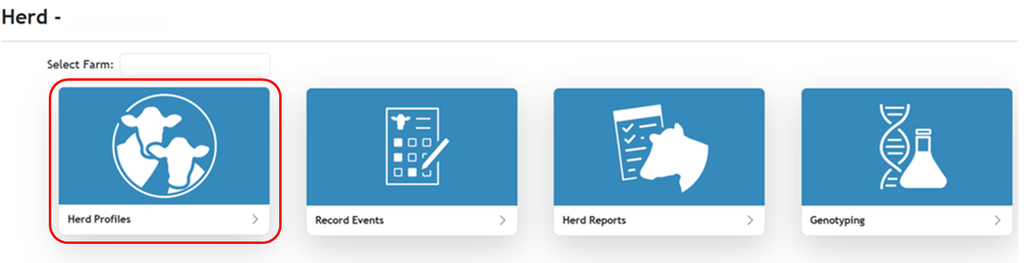
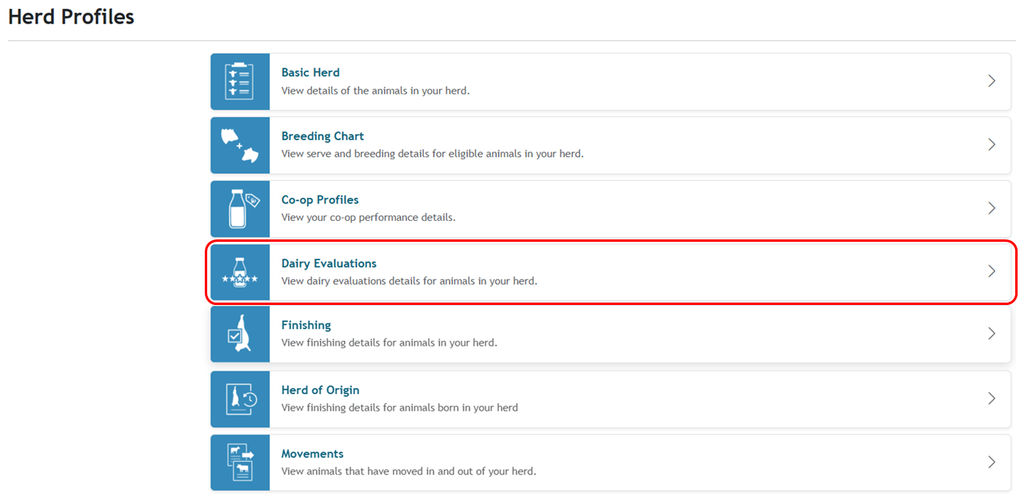
Log in to your SRG User Portal, select the ‘Herd Profile’ on your herd dashboard and select ‘Dairy Evaluations’.
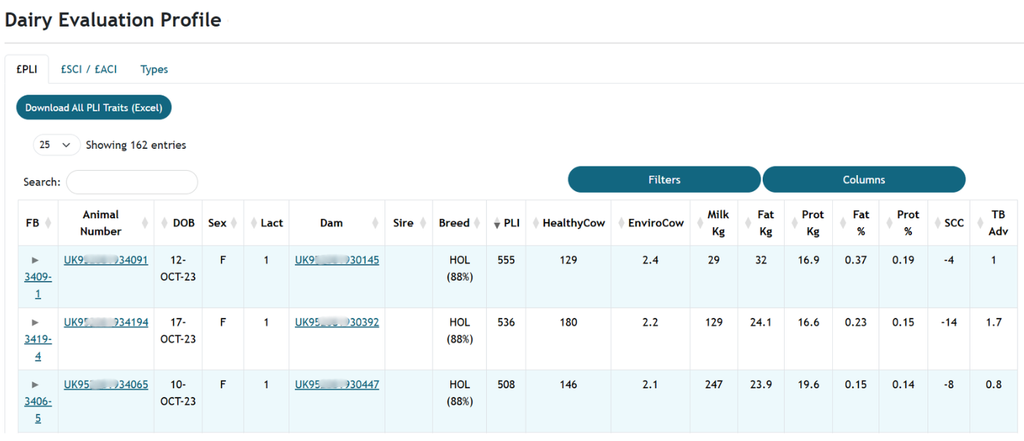
Dairy Evaluations allow farmers to see their £PLI information, £SCI/£ACI and type traits:
- £PLI (Profitable Lifetime Index) estimates the genetic potential of an animal to contribute to lifetime profitability.
- It takes account of a range of traits including production, fertility, lifespan and health.
- It helps farmers identify animals with the potential to be more profitable over their lifetime.
- £PLI is a within-breed genetic index, meaning you can only compare animals of the same breed using this index.
- HealthyCow is a sub-index of £PLI and focuses on the genetic potential for improved health, fertility and longevity.
- It takes into account mastitis, lameness, SCC, calf survivability and fertility.
- It helps identify animals that can contribute to healthier herds, fewer health problems and longer productive lifespans.
- EnviroCow is a sub-index of £PLI and assesses the genetic potential for environmental efficiency in dairy production.
- It is expressed on a scale of -3 to +3.
- A 1-point improvement in EnviroCow results in a herd producing 33% higher lifetime fat and protein, 10% less feed consumption and 10% less methane.
- It helps identify animals with the potential to produce milk more efficiently, considering factors such as feed efficiency, production, fertility and lifespan.
- Milk, Fat and Protein evaluations provide an insight into the genetic potential for milk yield and milk solids.
- Farmers can use this information to identify animals that align with their production targets and milk contract requirements.
- The SCC evaluation indicates the genetic potential to influence somatic cell counts in an animal’s offspring.
- Selecting animals with favourable SCC genetics can help improve udder health and reduce the genetic tendency towards higher cell counts.
- SCC is expressed on a scale of +40% to -40%, with a negative figure desirable.
- For example, a bull with -15% SCC is expected to produce daughters with 15% lower SCC than a bull with 0.
- TB Advantage provides an indication of an animal’s genetic potential for resistance to bovine tuberculosis.
- It offers farmers an additional consideration when making breeding decisions.
- It is expressed on a scale of -3 to +3, with a positive figure desirable.
- Every 1-point increase in TB Advantage score results in 1% fewer daughters expected to go down with TB during an infection outbreak.
£SCI & £ACI
Dairy Evaluations also allows farmers to see their Spring Calving Index (£SCI) and Autumn Calving Index (£ACI) for animals within their herd.
- £SCI (Spring Calving Index) is designed for spring block-calving herds, which rely heavily on grazed grass.
- It is an across-breed genetic index, allowing farmers to compare all animals in their herd and bulls across different breeds.
- It places higher emphasis on milk quality rather than production.
- It has a high weighting for fertility, improved leg and udder health, as well as reduced maintenance costs.
- £ACI (Autumn Calving Index) is suitable for autumn block-calving herds and reflects the costs of feeding for winter milk production and the higher milk price per litre received at that time of year.
- It is also an across-breed genetic index, allowing farmers to compare animals across different breeds.
- It has a higher weighting on milk production than £SCI.
- It also places strong emphasis on fertility, as well as longevity and efficiency.
Type Traits
Type trait evaluations provide an insight into the genetic potential for an animal’s physical characteristics and conformation.
They cover a range of traits including type merit, udder characteristics, feet and legs, body stature and chest width.
These evaluations help farmers identify animals with desirable physical characteristics that can contribute to improved functionality, longevity and suitability within their herd.
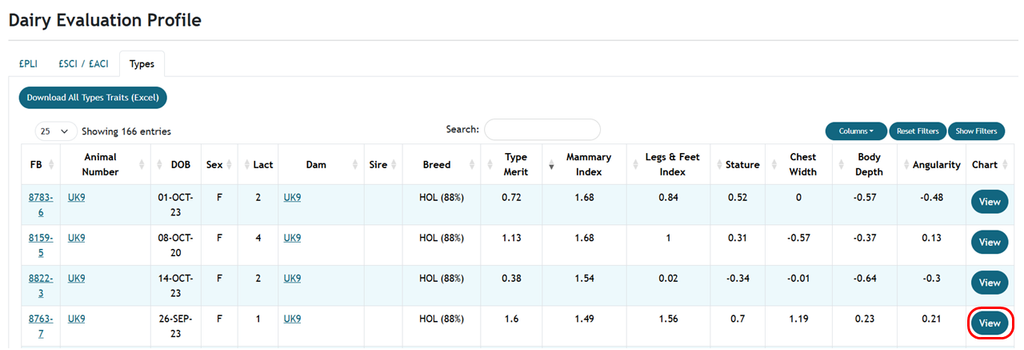
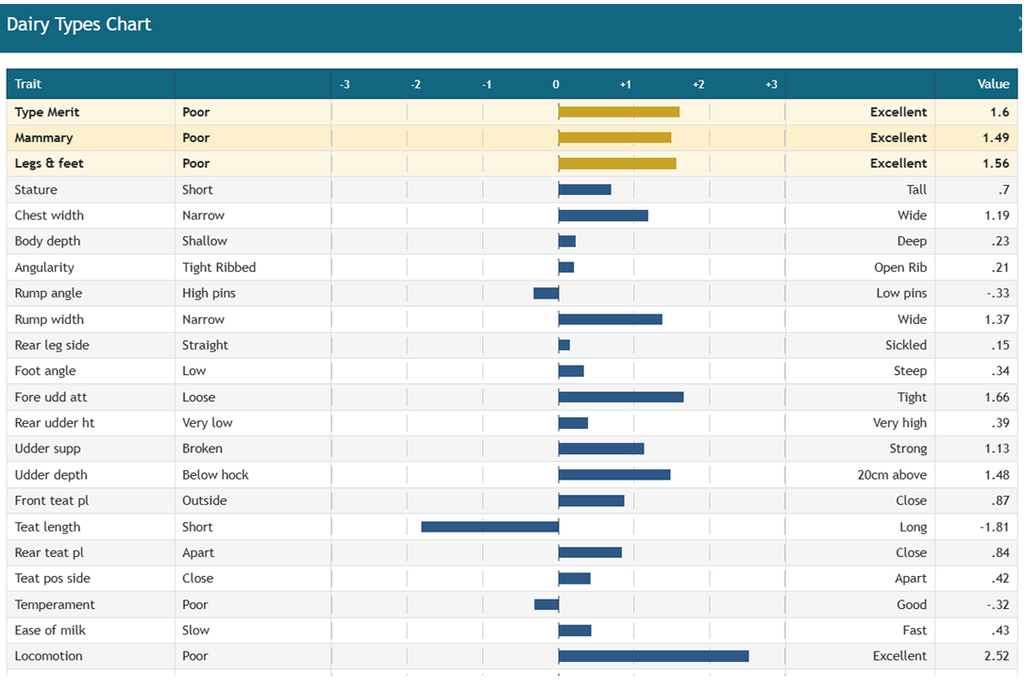
Alongside the individual dairy evaluations, a type trait chart is also available to provide a visual overview of an animal’s genetic strengths and weaknesses across the different conformation traits.
Farmers can use this information to identify areas for improvement and make more informed breeding decisions.
If you need help locating or understanding your dairy evaluations information or have any questions, please contact our customer support team on 02820462280 or email [email protected].


